

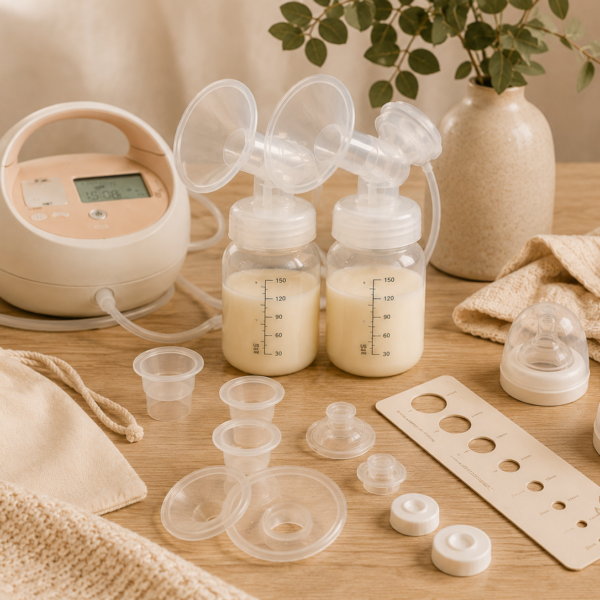
A lactation station is just a spot you set up once so that every feed or pump session afterward is easier. It sounds small. It is not. When you are feeding eight to twelve times a day, the difference between everything being within arm’s reach and having to get up mid-session is enormous.
You are going to spend a lot of hours in this chair. Make it a place you do not dread.
Pick your spot first
Choose somewhere you can actually sit for 20–40 minutes without being in the way. A corner of the couch, a glider in the nursery, one side of your bed. Two practical requirements:
- An outlet within reach for your pump and your phone.
- Back support. Not a stool, not the edge of the bed. Something you can lean into.
- A surface beside you — side table, nightstand, even a sturdy box.
What to keep there
For you
- A large water bottle. Bigger than you think, with a straw so you can drink one-handed.
- Snacks that keep — nuts, granola bars, dried fruit, nut butter packets.
- Phone charger with a long cable.
- Lip balm and hand lotion.
- A book or headphones, if you would rather not scroll.
- Nipple balm and a few nursing pads.
- Any medications or supplements you take at feed times.
For baby
- Burp cloths. More than you think.
- A muslin or light blanket.
- A pacifier if you use one.
- A spare onesie, because sooner or later you will need it.
If you are pumping
- A full set of clean pump parts, assembled and ready to go.
- A hands-free pumping bra you leave at the station.
- Storage bags or bottles, plus a marker for dating them.
- A small cooler with an ice pack if you are not near a fridge.
- Cleaning wipes for a quick between-session wipe-down.
Build a second one
If your home has more than one floor, or you spend evenings somewhere other than where you feed at night, build a second station. A basket you can carry room to room works just as well as a permanent setup. Duplicate the cheap things — burp cloths, snacks, a charger — so you are not moving supplies around at 3am.
The same goes for work. A dedicated bag with a spare set of everything means one forgotten valve does not cost you a session.
The part people skip
Put something at eye level that you actually like looking at. A photo, a plant, a window. You will be looking at it for hours, often in the dark, often exhausted. It matters more than it sounds like it should.
And keep a notes app or a small pad within reach. Feed times, which side you started on, questions you want to ask at your next appointment — you will not remember any of it later, and it is genuinely useful information to bring to a consultation.
Want personalized support?
Setting up a station is easy. Knowing whether your pump settings, flange size, and feeding routine are actually working for you is harder.
Made to Lactate offers virtual consultations, in-home visits, and seven-day postpartum support packages with a Registered Nurse and lactation coach. See the support packages →