

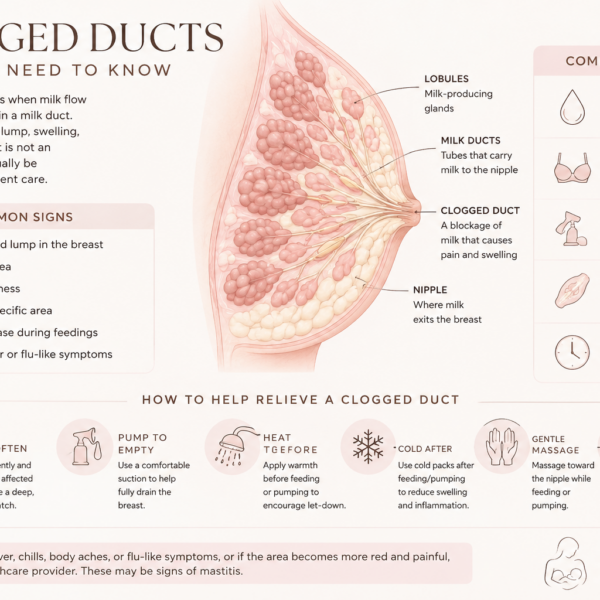
A clogged duct usually shows up as a firm, tender, sometimes reddened area in one breast. It can be uncomfortable enough to make you dread the next feed. The good news is that most resolve at home. The important part is knowing what actually helps and what makes it worse.
Guidance on this changed meaningfully in 2022. If you were told to apply heat and massage hard, that was standard advice for years. It is no longer what is generally recommended, and it can make things worse.
What is actually happening
It is now generally understood as inflammation and swelling in the surrounding tissue narrowing the duct — not a solid plug of milk sitting in a tube waiting to be pushed out. That distinction matters, because it explains why forceful massage tends to backfire. Aggressive pressure on already inflamed tissue creates more swelling, which narrows things further.
What tends to help
- Keep feeding normally. Feed on demand on both sides. Milk removal matters, but normal removal — not extra.
- Cold, not heat. Ice or a cold pack for 10–15 minutes after feeding helps with inflammation and swelling.
- Gentle lymphatic drainage. Very light strokes, moving from the sore area toward your armpit and collarbone. Light enough that the skin barely moves.
- Anti-inflammatory medication, if appropriate for you. Ask your provider or pharmacist what is suitable and what dose.
- A supportive bra that does not dig in. Underwire and tight straps can contribute.
- Rest and fluids. Unglamorous, genuinely useful.
- Sunflower lecithin is commonly suggested for recurrent episodes. Worth asking your provider about.
What to avoid
- Deep, forceful massage — including massage guns and vibrating devices held hard against the area.
- Extra pumping to ‘empty’ the breast. This signals your body to make more milk, which worsens the underlying problem.
- Prolonged heat before feeding.
- Dangle feeding and similar positional tricks. Popular for years, not supported now.
- Epsom salt soaks and other soaking methods.
When to call someone
Contact your provider promptly if you notice:
- A fever, or flu-like aching and chills
- A red, hot, spreading wedge-shaped area
- Symptoms getting worse over 24 hours rather than better
- A firm lump that does not change at all after a few days
- Any drainage, cracked skin, or an open area on the nipple
- Feeling genuinely unwell, not just sore
These can indicate mastitis, which sometimes needs antibiotics. Mastitis is common and treatable, and catching it early is much easier than catching it late. This is not a wait-and-see situation.
If it keeps happening
Recurrent clogs usually point at something structural rather than bad luck. The usual suspects are oversupply, a flange that does not fit, pump suction set too high, worn valves or membranes, a bra that compresses, consistently long gaps between feeds, or a latch that is not draining one area well.
Chasing each individual clog will exhaust you. Finding the pattern behind them will not.
This is general education, not medical advice, and it does not replace an assessment of you and your baby. If something feels wrong, please contact your provider.
Want personalized support?
Recurrent clogs almost always have a cause worth finding.
Made to Lactate offers virtual consultations, in-home visits, and seven-day postpartum support packages with a Registered Nurse and lactation coach. See the support packages →