

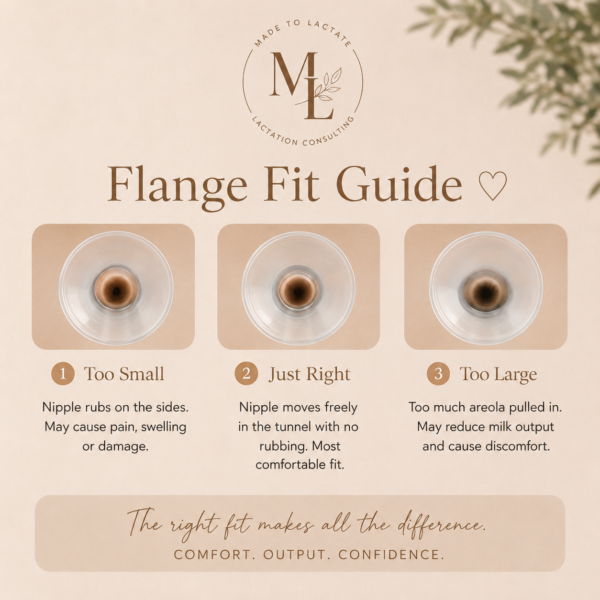
Flange size is the single most overlooked thing in pumping, and getting it wrong causes an enormous amount of avoidable pain and low output. Most pumps ship with a 24mm flange. Most people are not a 24mm.
If pumping hurts, or your output is lower than you would expect, this is the first thing I check.
How to measure
- Measure your nipple only — not the areola. Just the nipple itself, across the base.
- Measure in millimetres, ideally just after a feed or pump session when the nipple is everted.
- A printable ruler, a soft measuring tape, or a set of sizing rings all work.
- Measure both sides. They are frequently different, and it is completely normal to need two sizes.
Then add a few millimetres to your measurement for your starting flange size. Many people land somewhere between 13mm and 21mm, which is well below the 24mm that comes in the box.
How to tell it does not fit
Too large
- Areola is pulled into the tunnel along with the nipple
- Rubbing or chafing around the areola
- Output lower than expected
- A feeling of tugging rather than rhythmic suction
Too small
- The nipple rubs against the sides of the tunnel
- A white ring or blanching at the base after pumping
- Pain during or after the session
- The breast does not soften the way it should
Just right
- The nipple moves freely in the tunnel without touching the sides
- Little or no areola drawn in
- Pumping is comfortable — a pulling sensation, not pain
- The breast feels softer afterward
- The nipple looks round and normal afterward, not creased, striped, or blanched
Pumping should not hurt
This is worth saying plainly, because a lot of people are told otherwise. Pumping should feel like a steady pulling sensation. It should not be painful. It should not leave you cracked, blistered, or blanched. If it does, something is wrong — usually the flange size, sometimes the suction setting.
And higher suction is not more effective. Turning it up past comfortable causes swelling, which narrows the duct openings and actually reduces output. Comfortable, sustainable settings pump more milk than painful ones.
Things that change your size
- Engorgement in the early weeks
- Swelling from suction that is set too high
- Time — many people size down over the first few months
- Pregnancy with a subsequent baby
So it is worth re-checking every few months rather than measuring once and assuming it holds forever.
If you are between sizes
Size down rather than up. A slightly snug flange that lets the nipple move freely usually outperforms one that pulls in areola. Inserts are an easy way to adjust a flange you already own without buying a whole set.
Want personalized support?
Flange fitting is part of every consultation I do, and it is frequently the thing that changes everything.
Made to Lactate offers virtual consultations, in-home visits, and seven-day postpartum support packages with a Registered Nurse and lactation coach. See the support packages →